


Jetpack Joyride Racing
Halfbrick Studios
Jetpack Joyride Racing is a free racing game from Halfbrick Studios that takes the familiar Jetpack Joyride name in a different direction. Instead of focusing only on endless forward movement, it places speed, drifting, rally-style races, and collectible cards at the center of the experience. I found that change interesting because it gives the game a more competitive shape, but it also means the appeal depends heavily on whether you enjoy short races, repeated attempts, and gradual collection.
After spending time with it, my impression is that this is best approached as a quick-session racer rather than a deep simulation. The controls are designed to make movement feel immediate, while the card element adds a longer-term reason to return. The main question is not whether it is free to start, but how comfortable you are with a racing loop built around repeated progress and optional spending.
How the racing loop feels in everyday play
Quick races with a familiar arcade attitude
The strongest part of the game is its straightforward arcade identity. You are encouraged to build speed, take corners with confidence, and use drifting to improve your position. That makes each race easy to understand, even if mastering the best lines takes more effort. I could imagine opening it while waiting for transport, taking a few runs during a break, and closing it without needing a long uninterrupted session.
It does not present itself like a serious rally simulator, and that is a positive here. The focus is on reaction, momentum, and the satisfaction of finding a faster route through a turn. Players who prefer realistic handling, detailed vehicle tuning, or long championship events may find the experience too light. For me, the accessible approach works better when I want something energetic without first adjusting a large set of driving options.
The drifting emphasis also gives the races a useful rhythm. A corner is not simply an obstacle to slow down for; it becomes a chance to preserve speed and gain an advantage. That creates a small but meaningful skill gap. A new player can finish a race by reacting naturally, while a more practiced player can think about where to enter a turn, when to release the drift, and whether a risky line is worth taking.
Related News






Cards add a second reason to keep playing
Collectible cards give the racing structure a progression layer beyond simply winning individual events. Even when a run does not go perfectly, the collection goal can make the session feel worthwhile. This is useful for players who enjoy checking gradual progress, especially when they like having something to work toward between races.
At the same time, cards can change how the game feels. A pure arcade racer asks whether you drove well in the current moment. A card-based racer also asks whether your longer-term collection is helping you compete. That can be motivating, but it may be frustrating for someone who wants every result to depend only on steering and timing.
My practical advice is to treat the card system as a support for replay value rather than as the sole reason to play. Focus first on learning the feel of the races. If you chase collection progress before becoming comfortable with drifting, a disappointing result can be difficult to interpret: was the problem your driving, your current card setup, or both? Separating those questions makes the game easier to enjoy.
Gallery
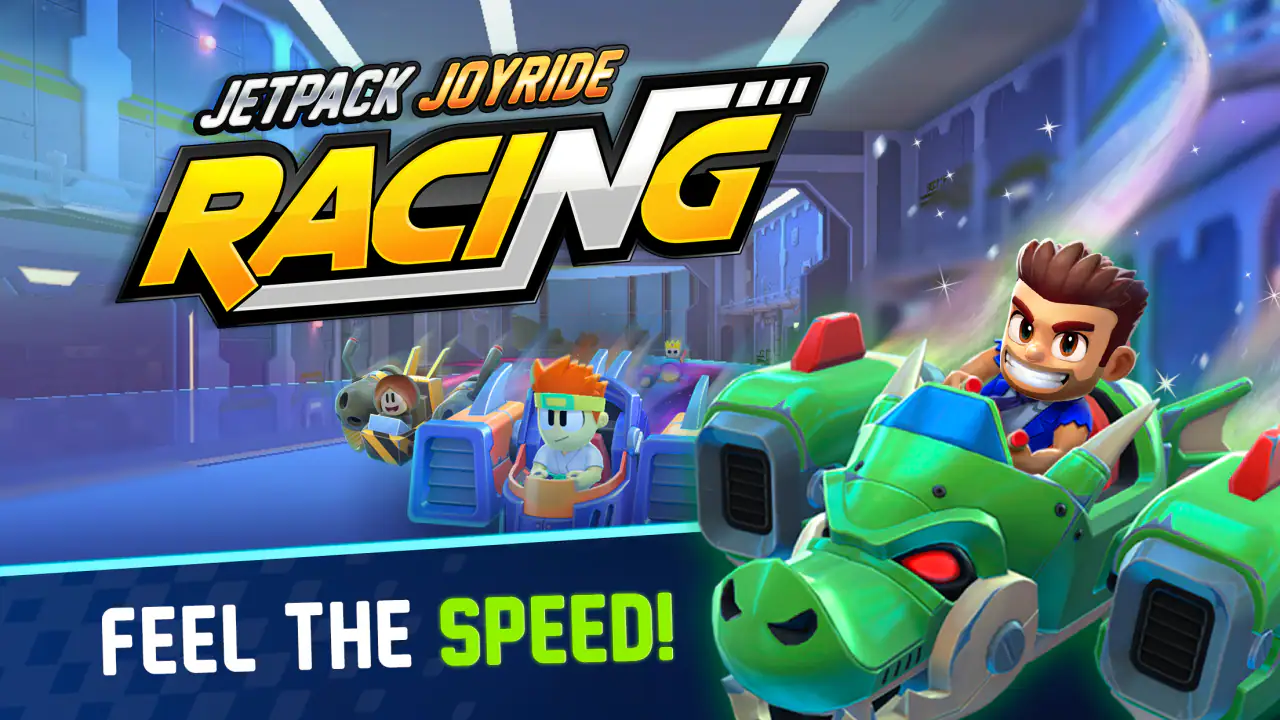
Where progress can create pressure
Free racing games often have two kinds of pressure: the pressure to improve your driving and the pressure to keep up with progression. This one clearly combines both ideas through racing performance and cards. That combination can be satisfying for players who like layered goals, but it can also turn a relaxed game into a routine of repeating races for a better outcome.
I would not recommend treating every race as a test that must be won. A better everyday approach is to give each session one purpose. On one run, concentrate on clean drifting. On another, try to understand the course and avoid unnecessary collisions or mistakes. This makes improvement feel more concrete than simply restarting whenever the result is not ideal.
The game is rated for Everyone, which fits its accessible presentation and broad audience. Still, an age rating does not tell you whether the progression style will suit a particular player. Younger players may enjoy the speed and collecting, while parents should remember that the game includes in-app purchases ranging from $2.99 to $29.99 per item. That spending range makes it sensible to discuss purchase expectations before handing the device over.
What the purchase model means in practice
The game itself is free to download and play, so the initial barrier is low. The presence of optional items priced from $2.99 to $29.99 means spending can become a meaningful part of the experience for players who want to accelerate or expand their progress. I am deliberately keeping the judgement narrow here: the prices are clear, but I would not claim that paid items guarantee victory or that the game is unplayable without them.
For my own use, the safest way to approach a free racer like this is to decide on a no-spend or fixed-spend rule before the card collection becomes emotionally important. That is especially useful after a close loss, when the temptation to buy something can feel stronger than it did at the start of a session. A purchase limit turns the decision into a planned choice instead of a reaction to frustration.
Families should also consider who controls the device and whether purchases are protected through the phone or tablet’s account settings. That is not a criticism of this particular game; it is simply a sensible habit whenever a free title offers individual items at several price points. The game’s Everyone rating makes it broadly approachable, but adults still need to manage the spending environment.
Fairness, competition, and what I would want to know
Can driving skill still matter?
The design has the ingredients for a fair-feeling competition because speed and drifting reward player input. When I improve a corner through better timing, the result feels connected to something I did rather than something random. That is the kind of feedback I want from an arcade racer: mistakes should teach me something, and successful turns should feel repeatable.
The card system introduces a possible complication. Collection-based progression can affect how evenly matched two players feel, even when both drive well. I cannot responsibly say that cards decide races or that paid items create an unfair advantage, because those claims would go beyond what is established about the game. What I can say is that players who demand a strictly skill-only racing environment may prefer a title without a collection layer.
This distinction matters when choosing between alternatives. A traditional arcade racer with a fixed roster and fewer progression variables may be better for someone who wants to compare driving ability directly. A kart-style racer may be preferable if you want chaotic items and character personality. Jetpack Joyride Racing sits between those expectations: it uses recognizable arcade energy, but its rally racing and cards give it a progression identity of its own.
How I would judge a close race
When a result feels unfair, I would first repeat the same course while changing only my driving approach. Try a wider entrance into a corner, begin the drift earlier, or sacrifice a little speed to exit with better control. If the result improves, the game is giving you a useful skill path. If the result remains confusing, the card progression may be influencing the experience more than you would like.
This is one of the less obvious trade-offs in the game. The collectible layer can make a mediocre session feel productive, but it can also make it harder to identify the exact reason behind a loss. Players who enjoy experimenting will probably see that as depth. Players who want clean feedback may see it as unnecessary noise.
Version, device fit, and expectations
The current version is 1.2.1, and the game requires Android 8.0 or later. That gives Android users a clear compatibility checkpoint before installing. If your device meets that requirement, the more important practical question is whether you have enough patience for repeated races and collection progress rather than whether the concept is difficult to understand.
The game has passed the early discovery stage without becoming a massive mainstream racing platform: it has over 100 thousand installs, an average rating of 3.4 from around 593 ratings, and around 25 written reviews. I read that combination as a reason to approach it with measured expectations. There is enough public interest to show that people are trying it, but the rating suggests that the experience will not satisfy everyone equally.
Those figures are not a verdict by themselves. A player who enjoys Halfbrick Studios’ playful style and short arcade challenges may have a better time than someone arriving from a realistic rally game. I would use the rating as a prompt to test the controls and progression personally, not as proof that the game is either excellent or poor.
What remains important to watch
The biggest unknown for a careful buyer is how the balance between racing skill, card collection, and purchases feels over a longer period. The game clearly has free access and paid items, but I would avoid pretending that a price range alone explains the complete economy. The practical experience depends on how often a player feels encouraged to return, whether normal play remains satisfying, and how much the cards affect competitive confidence.
That uncertainty is not a reason to reject the game automatically. It is a reason to start slowly. Play without buying anything, notice whether the basic races remain enjoyable after the novelty fades, and decide whether the collection system adds motivation or pressure. If the answer is pressure, the game may not be the right long-term racer for you, even if the controls themselves are enjoyable.
Who should try it and who should skip it
I would recommend it to someone who wants a free, energetic racing game that can be played in small bursts. It is particularly suitable for players who like drifting, arcade-style speed, collectible goals, and the feeling of improving through repeated attempts. The Jetpack Joyride connection may also appeal to people who enjoy Halfbrick Studios’ playful approach but want a different type of challenge.
I would be more cautious about recommending it to a player who wants a complete offline-style racing package, a realistic rally model, or a competition where every advantage comes strictly from driving. I would also suggest skipping it if collectible progression tends to make you feel compelled to spend. In that case, a simpler racer with fewer progression layers may offer a calmer and more transparent experience.
For an everyday scenario, imagine having ten minutes before an appointment. This game fits that window well: start a race, focus on one cornering goal, and stop after a few attempts. The same design can be less comfortable during a long session, because repeated races and collection targets may begin to feel like work if you are not actively enjoying the improvement process.
My final trust verdict
My overall view is cautiously positive. Jetpack Joyride Racing has a clear identity, approachable racing, and enough card-based progression to give short sessions a purpose. I like that drifting is not just decoration; it gives the player a concrete technique to practice. The free entry point is also helpful for anyone who wants to test the handling before making a commitment.
My reservation is the relationship between progression and spending. The game offers in-app purchases from $2.99 to $29.99 per item, so I would not recommend entering without a personal spending boundary. I also would not promise a perfectly skill-only competitive experience while cards are part of the design. Those are not automatic deal-breakers, but they are important considerations for anyone deciding whether to make this a regular game.
In the end, I see it as a good fit for casual arcade racing with a collection habit, not as a replacement for a deep rally simulator or a stripped-down competitive racer. Try it free, learn the drifting before judging your results, and keep purchases deliberate. If you enjoy improving one corner at a time without needing every session to feel perfectly pure or perfectly predictable, this is worth a look.
FAQs for Jetpack Joyride Racing
What is Jetpack Joyride Racing?
Jetpack Joyride Racing is a fast-paced arcade racing game built around the familiar Jetpack Joyride style of action. Instead of simply running through a laboratory, players control a vehicle or character through challenging tracks, collect rewards, avoid hazards, and compete to finish quickly. The game is designed for short sessions, making it suitable for casual play, although its obstacles and competitive objectives can become surprisingly demanding.
How do you play Jetpack Joyride Racing?
Gameplay focuses on controlling your racer through obstacle-filled courses while maintaining speed and reacting quickly to ramps, barriers, gaps, and other hazards. Depending on the mode and version available, players may need to collect coins, reach the finish line, complete missions, or outperform rivals. The controls are generally easy to understand, but mastering timing, movement, and track shortcuts takes practice.
Is Jetpack Joyride Racing free to download and play?
Jetpack Joyride Racing may be available as a free download, but users should check the current store listing for the exact pricing and monetization details in their region. Free versions commonly include optional in-app purchases for upgrades, cosmetic items, currency, or faster progression. Some releases may also display advertisements, so players who prefer an uninterrupted experience should review the store information before installing.
Can Jetpack Joyride Racing be played offline?
Offline availability can depend on the specific version, device, and game mode. Basic racing or single-player content may work without a constant internet connection, while advertisements, cloud saves, leaderboards, events, updates, and competitive features may require online access. It is best to launch the game once while connected and check which features remain available after enabling airplane mode or disconnecting from Wi-Fi.
Is Jetpack Joyride Racing suitable for children?
Jetpack Joyride Racing is generally easy to understand and uses cartoon-style visuals, which can make it appealing to younger players. However, parents should check the age rating, advertising policy, and in-app purchase settings before allowing children to play. Fast gameplay, repeated attempts, competitive rewards, and optional purchases may encourage extended sessions, so parental controls and purchase restrictions are recommended.
Pros
- Fast
- entertaining races that are easy to learn and play in short sessions.
- Jetpack-powered movement adds a fun twist to traditional racing gameplay.
- A variety of vehicles and upgrades keeps progression feeling rewarding.
- Bright graphics and lively effects give the game an appealing arcade style.
- Works well for casual players who enjoy quick challenges and simple controls.
Cons
- Races can become repetitive once the available tracks and challenges are familiar.
- Frequent obstacles and sudden hazards may feel frustrating during difficult runs.
- Some upgrades and content may require considerable grinding to unlock.
- The game can encourage in-app purchases for faster progression and extra items.
- Performance may vary on older devices
- especially during effects-heavy races.


